
Why No Action on Climate Change?
We know climate change is real, but we seem not to believe it.

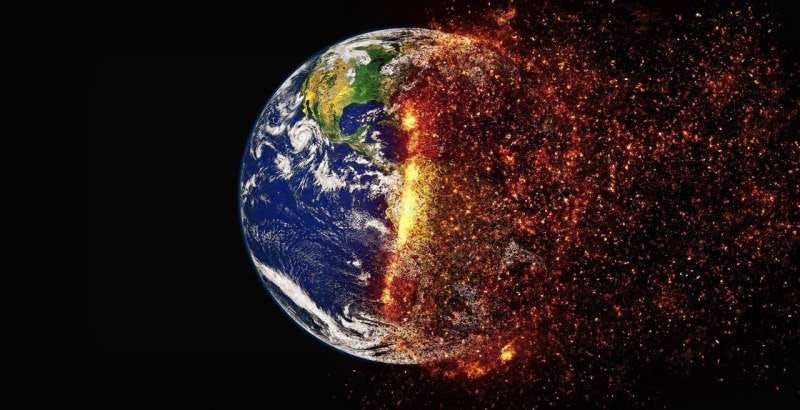
Why no action on climate change? Or why has the action been insufficient and not in proportion to the problem? Have scientists and journalists lost the ability to educate the public? Has the public lost the ability to learn? To believe? To know?
As a body politic, we know that climate change of crisis proportion is happening right now, but we do not yet believe it.
For those who think about what constitutes knowledge and belief—namely, philosophers and psychologists—knowledge is essentially tied to action. When one understands, one is “pierced” by knowledge. In its essence, true knowledge or piercing knowledge spurs action. If you do not act, you have not yet really been pierced.
To repeat: The United States body politic knows climate disaster is here, but does not believe it. Can we analyze that in and of itself?
On what occasions do you know something but not believe it? Perhaps when the thing known is too scary to contemplate. We all know the fact of our mortality. We knows we will die one day. But we do not really believe it moment to moment, unless our moments consist of ongoing agonized screaming in preternatural terror. We know we die, but only occasionally do we also believe it.
Another example of knowing without believing is when you act against your better judgment. Weakness of will, like procrastination, is when you know the thing you should be doing but you are doing something else. The fact that you are not doing the thing you know you should do demonstrates that you do not really believe what you know about what is best.
Sometimes we know without believing when it’s too scary to believe it.
What happens when we finally come to believe what we know?
The reaction to coming to believe something you already knew is not always salutary. We would like to think, and we can hope, that when the body politic and when individuals truly believe what is known about our current climate crisis, their course of action would be to try to do something to counteract it.
But this is not always the case. How does one respond to imminent doom? Mute, stunned, bewilderment is sometimes the reaction. Sometimes hope is lost, the doom embraced. Sometimes death cults arise.
We must endeavor to be pierced by this knowledge so that we act to counter the climate crisis.
So, what do we know?
In the early 1960s, a young graduate student in astronomy named Carl Sagan focussed his research on Venus. Telescopes and spectroscopy analysis revealed that Venus’ atmosphere was very high in carbon dioxide. Sagan hypothesized that the high level of carbon dioxide in Venus’ atmosphere would trap the sun’s heat and make Venus like a planetary “greenhouse.” He further hypothesized that it would be so hot that water would boil and Venus would be a dry, hot, inhospitable planet. When probes were sent to Venus his views were confirmed: the surface temperature of Venus measured 900 degrees Fahrenheit, hot enough to melt lead.
Venus became a cautionary tale about how a planet’s atmospheric changes could go wrong. The term “greenhouse gasses” began to circulate. It was as early as the 1960s that scientists officially told President Lyndon Johnson about how CO2 was increasing in Earth’s atmosphere because of burning fossil fuels and it was going to raise the global average temperature, which would eventually be catastrophic for us.
Here are some facts I got from an hour reading NASA’s website on climate change.
https://climate.nasa.gov
The science undergirding what we know about global warming is fantastically complicated although it can be simplified…. It is, at some level, astonishingly simple, clear, powerful, and compelling…. like the greenhouse Venus.
In May 2021 the amount of carbon dioxide (CO2) in the atmosphere measured 419 parts per million, according to the National Oceanic and Atmospheric Administration’s observatory in Hawaii. This is about a 50 percent increase above the 278 parts per million measured in 1750, which the U.N.’s Intergovernmental Panel on Climate Change use as a pre-industrial baseline of atmospheric CO2.
CO2 is a greenhouse gas. Increase in greenhouse gasses causes increase in global average temperature.
According to NASA, the global average temperature has increased by 1.18 degrees Celsius since 1880. From 1980 to 2000 it increased about .25 degrees. From 2000 to 2020 the amount of increase doubled to .5 degrees.
NASA puts it more starkly in a way Americans should understand. “The Earth average temperature has increased about 2 degrees Fahrenheit during the 20th century.”
What’s the big deal? Two degrees Fahrenheit is a big deal because “it’s an unusual event in our planet’s recent history.” Evidence from tree rings, ice cores, and coral reefs show that global average temperature is usually stable over long periods of time.
Small changes in global average temperature occasion enormous changes in the environment. At the end of the last ice age, the Northeast United States was buried in more than 3,000 feet of ice. But average temperatures were only about 7 degrees cooler.
To have an ice age took a drop of just 7 degrees in the average. The fractional increase in global averages since 1980 has increased the frost-free season (and the corresponding growing season). The growing season is projected to increase by an entire month or more in the next 80 years if nothing is done to curb greenhouse gas emissions.
Half of one degree Celsius increase in global average temperature has known effects. The IPCC’s Sixth Assessment Report shows that fractional increases of global average temperature causes more and greater wildfires—more in number and more ferocious. The causation is easy to understand. Higher temperatures make for drier conditions which makes fires easier to start and makes for more, drier fuel to burn. Through a slightly more circuitous causal chain, fractional increases of global temperature cause more extreme rain events with more devastating floods and cause more frequent and more powerful extreme wind events, including tropical cyclones.
(Can anyone find an estimate of the cost in dollars of all the storms and wildfires which can be at least partially chalked up to climate change? Put it in the comments.)
There is a certain lag time. Increase in atmospheric CO2 makes its proportional increase in global temperature felt around a decade later.
Even if we were to cease all greenhouse gas emissions today we would continue to see warming for around 10 years. The disaster is here now. It’s been here already for a while. We are in the thick of it.
If you know something but do not believe it you are in the position Oedipus was in immediately after he learned that he had killed his father and married his mother. For a split second or maybe longer he had been told and he understood but it had not, shall we say, sunk in. He did not yet believe it, did not yet grok it. When, finally, Oedipus, truly believed what he knew, when he understood clearly and distinctly that it was too late… he cut out his own eyes.
It is almost too late for us. We must believe what we know and we must act now.