
The Copernican Revolution
Part 6 of 10 in the history of philosophy

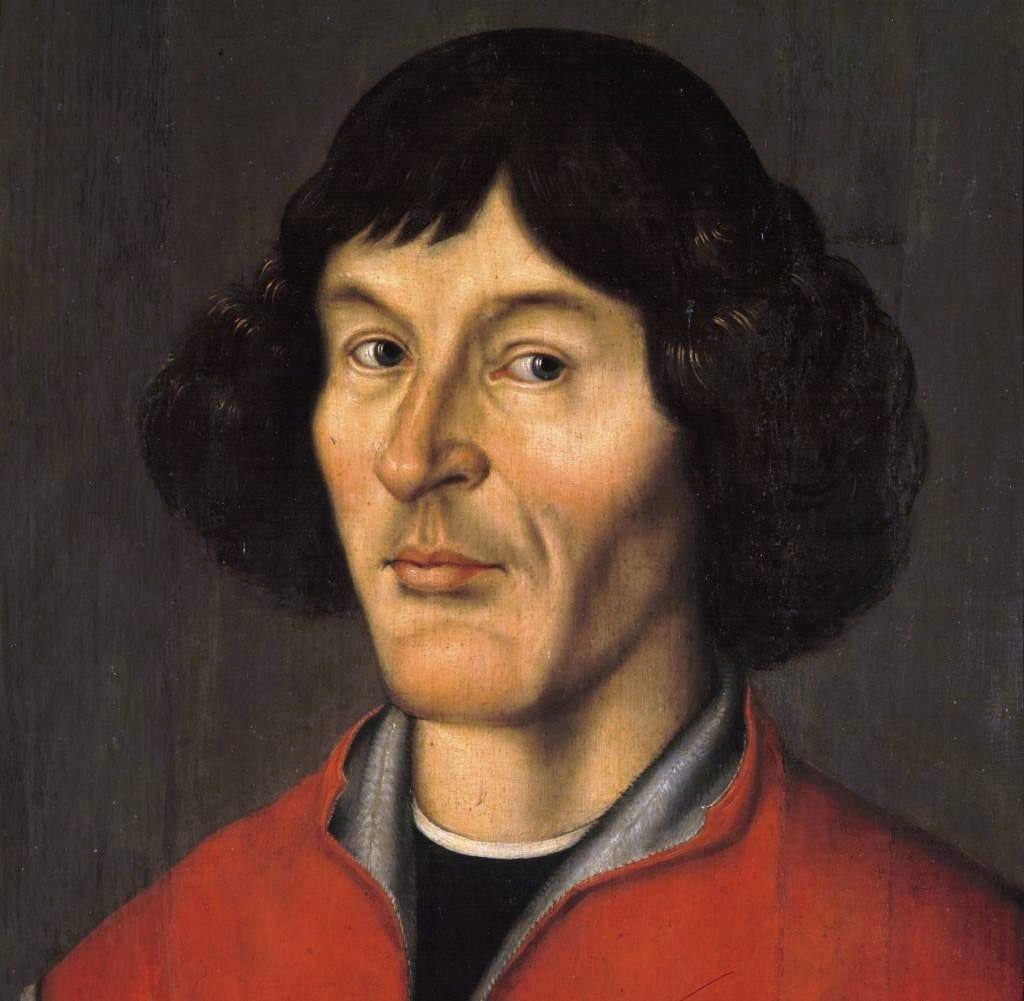
The Medieval period came to an end with the Renaissance, in particular with the Scientific Revolution (roughly 1550CE – 1700CE), which ushered in enormous changes in the worldview of European civilization. The period from Nicolaus Copernicus (1473CE – 1543CE) to Isaac Newton (1643CE – 1727CE) serves as an epochal demarcation separating Antiquity and the Middle Ages from the period known as the Modern Age. That is to say, starting with Copernicus’s work of 1543, On the Revolutions of the Heavenly Spheres (De Revolutionibus Orbium Coelestium) and culminating in Newton’s work of 1687, Mathematical Principles of Natural Philosophy(Philosophiae Naturalis Principia Mathematica), the old world was upended.
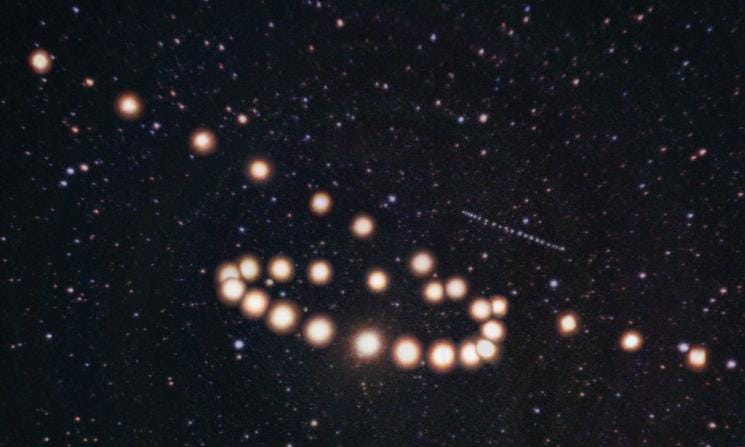
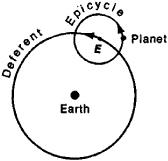
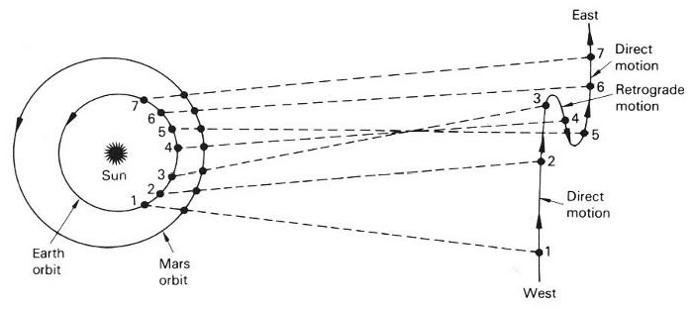
Copernicus’s sun-centered (heliocentric) view of the universe overturned the geocentrism, which had been endorsed by commonsense and by Aristotelians like Claudius Ptolemy (100CE - 170CE). Galileo Galilei (1564CE - 1642CE) studied the physics of motion and of free fall and used telescopes to confirm the phases of Venus and observe four of Jupiter’s moons. Many other scientists including Francis Bacon (1561CE - 1626CE), Rene Descartes (1596CE - 1650CE), Johannes Kepler (1571CE - 1630CE), Robert Hooke (1635CE – 1703CE), made important contributions, culminating in Newton’s law of gravity and other advances.
Thomas Kuhn—inventor of the concept of a “paradigm shift”—writes:
“The Copernican Revolution was a revolution in ideas, a transformation in man’s conception of the universe and of his own relation to it. Again and again this episode in the history of the Renaissance thought has been proclaimed an epochal turning point in the intellectual development of Western man…”
Kuhn writes that the Copernican Revolution had “unanticipated by-products.” The changes in how old phenomena were newly explained and changes in what counted as legitimate types of explanation… “…were instrumental in the transition from medieval to modern Western society, because they seemed to affect man’s relation to the universe and to God.” Kuhn elaborates:
“Men who believed that their terrestrial home was only a planet circulating blindly about one of an infinity of stars evaluated their place in the cosmic scheme quite differently than had their predecessors who saw the earth as the unique and focal center of God’s creation. The Copernican Revolution was therefore also part of the transition in Western man’s sense of values.”
The new scientist rebelled against what had stood—with only some mutations—for more than a dozen centuries. In the 1200s, Aquinas (1225CE - 1274CE) began a systematic synthesis of Christianity and the philosophy of Aristotle. It was called “scholasticism” and the medieval thinkers who perfected it were called “the schoolmen” because this Christianized Aristotle was used as a method of learning in schools far and wide for hundreds of years during the Medieval period. In History of Humanity: Scientific and Cultural Development. Volume V. From the Sixteenth to the Eighteenth Century, which, interestingly, was published by the United Nations Educational, Scientific and Cultural Organization (UNESCO), we read that there was a
“…remarkable synthesis between Aristotelian natural philosophy and Christian theology [which had been] accomplished during the High Middle Ages, a synthesis which succeeded in erecting upon Aristotelian—and therefore geocentric—foundations a world picture the very architecture of which was thought to reflect the moral order of the Christian faith.”
All the thinkers involved in the new science—Copernicus, Galileo, Descartes, Kepler, Newton—had been trained in the scholastic tradition and they all joined in revolt against it. When Aristotle was overturned, parts of Christian theology that had assimilated him fell apart too.
The practitioners of the new science—especially Galileo, Descartes and Newton—saw the need to get rid of any and all trace of teleology in any and all explanations of physical phenomena. These advocates for the epistemic revolution of the European Renaissance knew that final causes and teleological explanations had no place in inductive system building.
Inductive system building starts with many particular instances of observation. You conduct an experiment and record the result (usually a quantitative result). You conduct the experiment again perhaps changing one aspect to see how it changes the result, which you record. From many such quantitative records of experimental observations, a single generalization—a general statement covering all the particular instances—is asserted. For example, perhaps you, Reader, remember working with inclined planes in high school or college physics. Roll the Hot Wheels car down the inclined track over and over in the physics lab and every time the force will equal the mass times the acceleration. Switch out a more massive Hot Wheels and its force will equal its mass times acceleration. Via induction you have arrived at Newton’s second law, f=ma.
For Galileo and Newton the concept of law (as in laws of nature) was that of a connection or relation between phenomena which was numerically measurable and inductively arrived at. From many particular cases—many particular experiments, many particular quantitative analyses—a pattern is discovered and a generalization can be made which is then confirmed or disconfirmed in matters of degree by subsequent experiments.
For Aristotle, by way of contrast, the concept of law was primarily of an intrinsic relation between phenomena, which was to be grasped through the reflective understanding or rationality. Laws had the nature of axioms or first principles. The epistemic path to first principles was conducted almost a priori. Indeed, this form of thinking was more a form of metaphysical speculation.
Instead of aiming to come up with rational principles describing various kinds of things in multiple disunified domains as Aristotle had done (e.g., sublunary versus celestial), Galileo and those coming after him sought to find out the universal laws that governed events of all kinds everywhere. Galileo’s method was inductive and empirical, whereas Aristotle’s was deductive and intuitive.
Aristotelian teleological explanations were found or arrived at by a process that was more intuitive, more based on attempts to systematize and revise commonsense. But teleological explanations can look like no explanation at all. Over time the only answer to a why-question modern people found acceptable would be an answer referencing an efficient cause, that is, a mechanistic causal explanation. Answering a why-question by citing a thing’s purpose or invoking an essential occult quality eventually lost the legitimacy it had enjoyed among medieval thinkers.
The general public became modern when it became sophisticated enough to find Moliere’s satirical take down of teleological explanations as withering as we do. In Moliere’s play of 1673, The Imaginary Invalid, he ridicules a group of physicians who explain the sleep-inducing properties of opium by citing opium’s “virtus dormitiva.” As I tell it to my students, that’s like saying: “Why did the potion make him fall asleep? It made him fall asleep because it contained a soporific—it contained something that makes you fall asleep.”
What’s wrong with final causes and teleological explanations is that they are circular. “The sleeping potion makes you sleep because it is soporific” is like saying “the poison kills because it’s poisonous.” A circular explanation doesn’t tell you anything. It doesn’t advance the ball down the field at all.
These circular, teleological explanations can be thought of as mere redescriptions of the phenomena needing to be explained. Someone describes a situation or event and then wants you to explain it. Yet you just redescribe the situation or event. A redescription is not an explanation.
At least, not usually. To be fair, sometimes a new description is better or more illuminating than an older description. And that can be something; it’s not always nothing. Learning that the sleeping potion works because it is made of something with soporific qualities at least tells you that the potion is not magic; it tells you that it’s a physical process. So sometimes a redescription is circular, but circular like an oblong circle and it does advance the ball down the field, but only by a nearly negligible distance.
The new scientists, however, were not in a mood to be charitable to the old ways of thinking. Newton said, “To tell us that every Species of Things is endow’d with an occult Quality by which it acts and produces manifest Effects, is to tell us nothing.”
Late addition: With the discrediting of teleological explanations, the viability of the concept of purpose and meaning writ large was lost. That is the origin of the scientific paradigm's assertion or implication that the universe is contingent and meaningless. When teleological explanations are disallowed by the new epistemic norms of the Scientific Revolution, purpose drains out of the universe and the Great Chain of Being is no more.
With the discrediting of teleological explanations, the viability of the concept of purpose and meaning writ large was lost. That is the origin of the scientific paradigm's assertion or implication that the universe is contingent and meaningless. When teleological explanations are disallowed by the new epistemic norms of the Scientific Revolution, purpose drains out of the universe and the Great Chain of Being is no more.