
FIRST VISIT? START HERE
I write about what we know but do not believe.
—David J. Frost
The Missouri Review will be publishing my 7500-word narrative nonfiction essay on free will denial in their Summer 2026 issue. My essay is about the gap between what we know versus what we believe and can actually live by—focusing on free will deniers like Stanford biologist, and author of Behave and Determined, Robert Sapolsky.
From my essay:
Sapolsky is convinced we do not have free will; so, from his perspective, he knows it. But he’s admitted he catches himself reverting to the default setting of free will belief every time he nonchalantly accepts responsibility. “Someone says, ‘You’re dressed nice today,’ and I say, ‘Thanks,’ as if I had anything to do with it,” Sapolsky joked during a guest appearance on NPR’s Radiolab.
The essay is expected to appear on the Project MUSE website on June 19 July 15, with physical copies reaching subscribers later in mid-July about a month later1.
I’m using the weeks before publication to build the larger conversation around it here. Consider subscribing to my Substack newsletter, Armchair Vertigo, for behind-the-scenes posts on what it was like to write the piece and companion essays on other truths we know but do not believe.
Subscribe if you want literary nonfiction about what it’s like to live with ideas—philosophical and scientific—that clash with ordinary life… that disturb our pre-theoretical ways of being, and derange those practices, ideas and concepts germane to day-to-day living.
Read me for:
The examined life as literary subject: I experiment in the genre of “autotheory,” à la Maggie Nelson. It’s theory applied to one’s own life. Ideas made felt, not just understood.
Literary nonfiction about mortality, meaning, happiness, grief, and self-deception: What resources can philosophy provide to an atheist grieving the loss of a loved one?
Live philosophical debates made personal: especially the dispute between Sam Harris and Daniel Dennett over free will, which Adam Gopnik called “the only debate worth having.”
Subscribe to my Armchair Vertigo newsletter
Please subscribe to my newsletter for one substantial essay each week (sent to your email inbox), plus shorter amuse-bouche on Mondays, Wednesdays, and Fridays (posted to the website, not sent to your email).
Brief bio
I’ve published essays in The Smart Set, SLAB literary magazine, Philosophy Now, and elsewhere. I wrote the first chapter in Girls and Philosophy, an Open Court anthology about Lena Dunham’s groundbreaking HBO show Girls.
For more than ten years, I’ve taught philosophy classes, exclusively online, for Alamance Community College in North Carolina.
I live on the Oregon coast with my dogs, Fritz and Lou Salomé, 3000 miles from Brooklyn.
More credentials of which I’m proud, even though their achievement must be chalked up to luck, given there’s no free will:
B.A. in English from Columbia University
M.A. in Philosophy from the University of California at Irvine
Ph.D. in Philosophy from the University of North Carolina at Chapel Hill
Now, here’s what to read next:
If you want more of the philosophical side of things—
Here’s an accessible history of the changing concept of happiness from the ancient Greeks to the Founding Fathers through to today. Plus, I show how hedonism and relativism insinuated themselves into happiness’s definition.
On the Genealogy of Happiness

Before Socrates, the ancient Greeks thought that a good or happy life (eudaimonia) was almost entirely a matter of luck or good fortune. Eudaimonia literally translates to “good spirit,” from eu=good and daimon=demon/spirit. Daron MacMahon, author of ...
If you want a more literary narrative—
Here’s the true story of my best friend’s death at fourteen-years old, which made me ask “Why?” so urgently that it turned me into a philosopher. Originally published in SLAB literary magazine, Issue 16. Archived here on Armchair Vertigo.
Halfway Twice is Not Yet Once

When we were thirteen-years old, my best friend, Matt, introduced me to punk rock. The year was 1987 and until then my limited music collection consisted of vinyl records of Run-DMC and the Beastie Boys, bootleg cassette copies of Doug E. Fresh and the Fresh Prince, plus cassette tapes I’d purchased of Kool Moe Dee’s “How Ya Like Me Now” and “Crushin’” by the Fat Boys.
Still want more from me?
Find additional selected writings here on Substack.
Find links to the original venues of selected essays: linktr.ee/davidfrost.
My homepage: davidjfrost.com.
Subscribe to my newsletter now.
Still here? Listen to the first paragraph read out loud. But, seriously, subscribe.
Addendum: About The Missouri Review
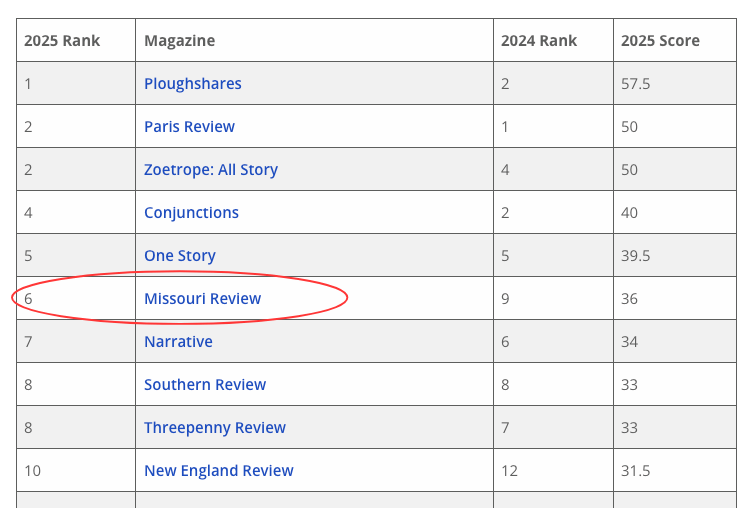
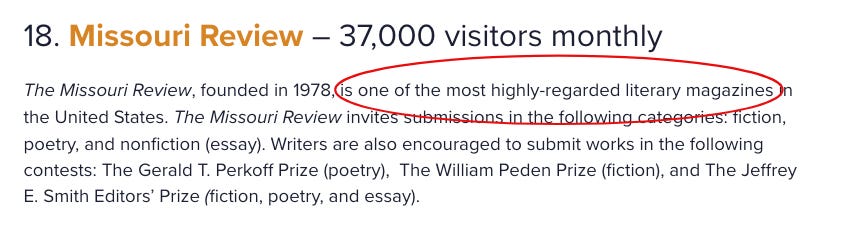
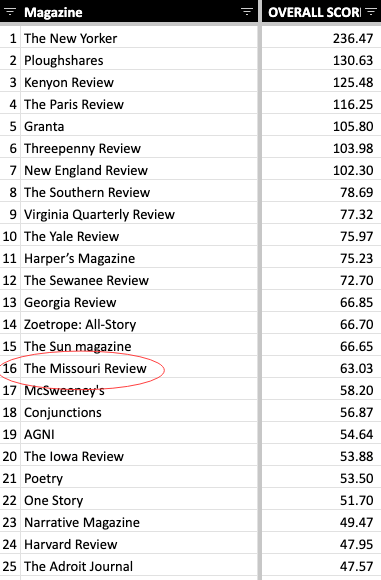
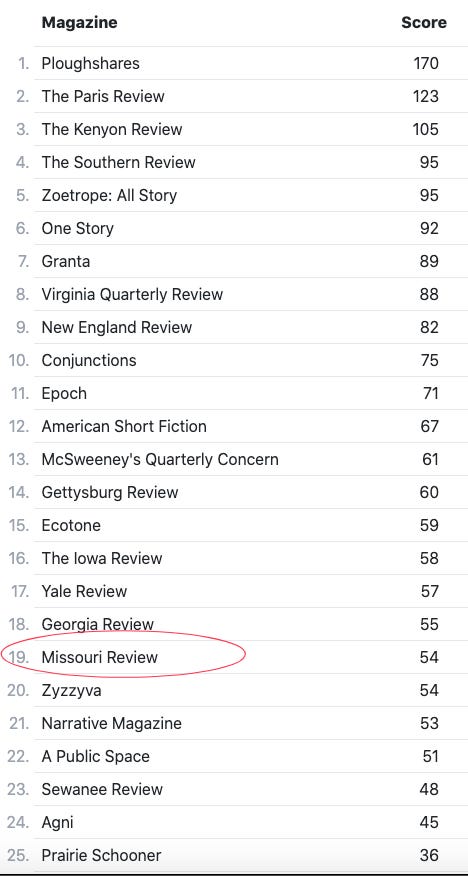
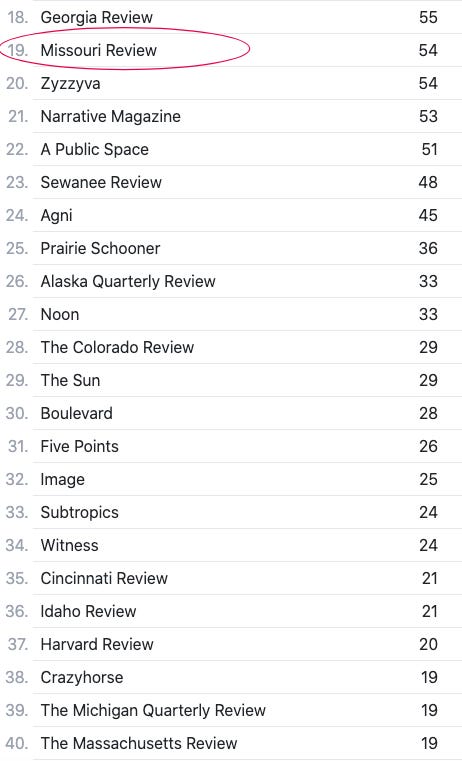
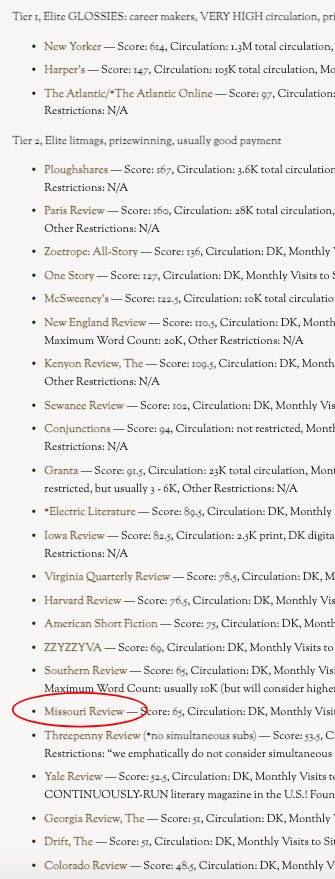
For readers outside literary publishing, The Missouri Review is one of the country’s most respected literary journals. Here are a few ways it shows up in rankings of literary magazines.
The assistant editor informed me that the launch date was pushed back.