
Derrida on Islam and Western Democracy
On the very day he learned he had contracted pancreatic cancer, Jacques Derrida participated in a deeply personal discussion with Mustapha Chérif.

Chérif, Mustapha. Islam and the West: A Conversation with Jacques Derrida. Originally published as L’Islam et l’occident, 2006. Translated by Teresa Lavender Fagan. With a foreword by Giovanna Borrodori. In the Religion and Postmodernism Series. Chicago: University of Chicago Press, 2008. xxii + 114 pp. Hardback, $19.99
On the very day he learned he had contracted pancreatic cancer (the cancer which in 15 months would kill him), Jacques Derrida participated in a deeply personal discussion with Mustapha Chérif on the topic of ‘Islam and the West.’ Chérif, a professor of philosophy and Islamic studies at the University of Algiers, had organized a conference in Paris on the theme of the dialogue between civilizations.1
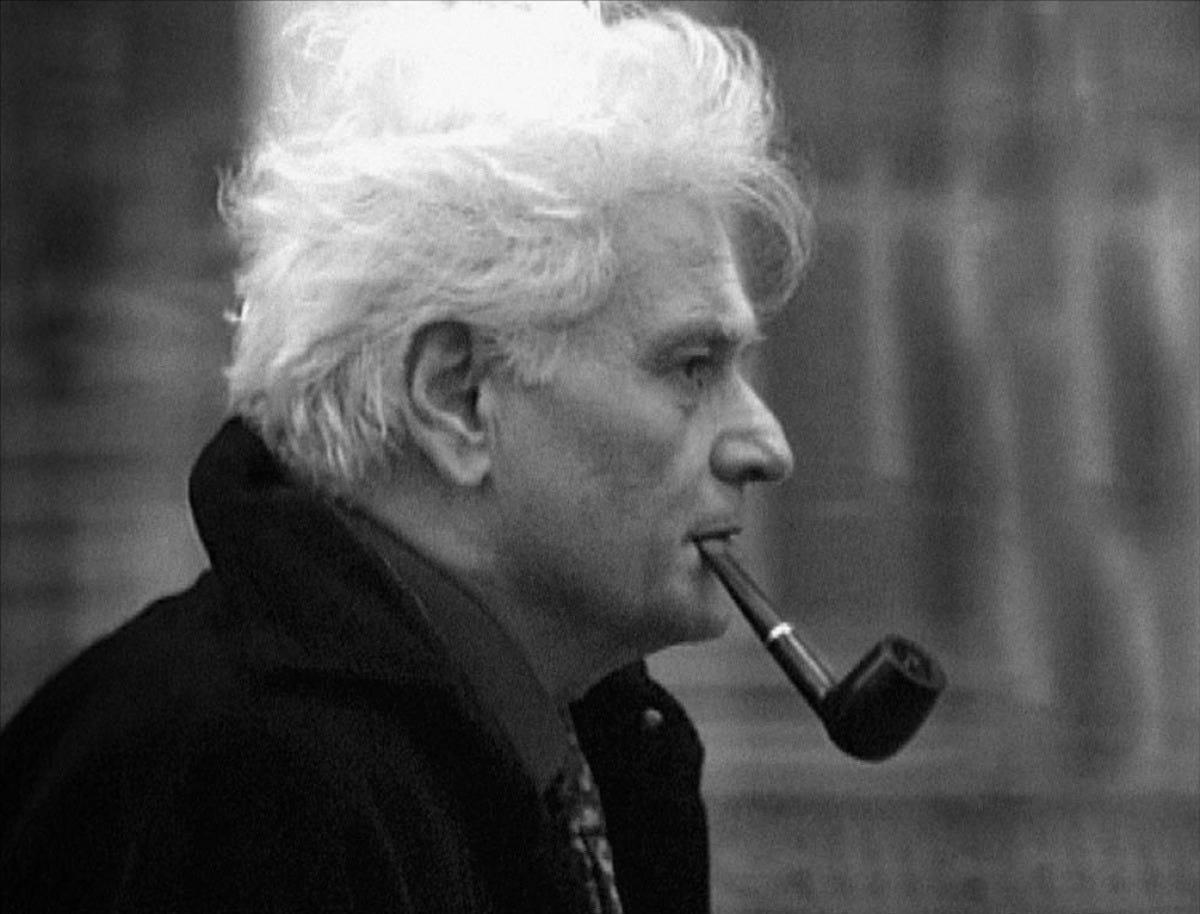
Derrida’s participation was highly anticipated: The extremely influential practitioner of deconstruction was born in Algeria, a life experience which had not left Derrida’s philosophical thought untouched. The text of this book is Chérif’s own essayistic account of their discussion, with Derrida’s remarks embedded as quotations. Chérif delivered a eulogy for Derrida after his death, which is included as an appendix.2
The central themes of Chérif’s book include (1) Derrida’s own mixed French and Algerian identity; (2) the false dichotomy that sets Islam and the West in opposition; (3) the responsible way to approach ‘the other’ – essential to Derrida’s philosophy; (4) the insistence that Muslims can affirm pluralistic democracy without losing their identities; (5) criticism of the ‘dehumanizing’ aspects of modernity, and (6) hope for a universal ‘democracy to come.’
These last two themes are the most fully developed. However, neither the foreword by Giovanna Borrodori, nor Chérif’s text surrounding the dialogue, are substantial enough to build an undergraduate course on alone. For pedagogical purposes, Chérif’s book would have to be supplemented with the relevant Derridean texts.3 One would also need philosophy of religion texts4 and political philosophy texts (recommendations made in the references section below) that would give more context to the claims made in the book.
Derrida was, as he says, ‘born a Jew in Algeria,’ (p. 29) in 1930. He was born in El Biar (Algiers) ‘into that part of the community which in 1870 had obtained [French] nationality through the Cremieux Decree, and then lost it in 1940.’ He says, ‘When I was ten years old, during the Vichy regime, I lost my French citizenship, and for a few years, [was] unable to attend the French school…. That was one of the earth-shattering experiences of my existence, one of the earth-shattering Algerian experiences of my existence,’ (p. 29).5
Borrodori writes, ‘after leaving Algeria for the first time in 1949 at the age of nineteen, Derrida returned as a soldier in the French army and a teacher in 1957-59, during Algeria’s war of independence,’ (p. xiii). He gave a lecture there in 1971; by then he was already extremely influential in the critical theory movement in American literature departments. ‘Interestingly, over the course of the next two decades Derrida would travel all over Africa and the Middle East, expressing political support for the oppressed in South Africa and in the Occupied Palestinian Territories, for example. But he would never again land in his country of birth,’ (p. xiii).
The contortions and idiosyncrasies of deconstruction that were most evident in Derrida’s early work are not on display in Chérif’s book. ‘In the 1990’s, Derrida’s works went in two simultaneous directions that tend to intersect and overlap with one another: politics and religion,’ (Lawlor 2006). Derrida’s deconstructive practice in this political-religious context is not especially difficult or obscure:
‘What I call deconstruction, [is] namely, to do these two things at the same time: to ask questions, for example, about the theological genealogy of the concepts of the political that organize Western thought, and European thought in particular, on the one hand, and, on the other, to maintain, in determined and determinable contexts, the survival of those concepts that one is in the process of questioning and deconstructing,’ (pp. 52-53).
One concept deconstructed in this sense is that of ‘dialogue’ between individuals and groups. Since the conversation recorded here is between two intellectuals with sympathetic but divergent ideas, and since the book’s theme is the dialogue between civilizations, Derrida’s ideas about respectfully and fully addressing ‘the other’ are often repeated and, indeed, instantiated.
Chérif says that the book,
‘was not meant to be a classic philosophical exercise but above all a testimony to the fact that addressing the other is possible, that speech, respectful speech, thoughtful speech, frank speech, is the favored path to face up to our responsibilities,’ (p. 28).
Derrida and Chérif assert this approach as the proper methodology for a dialogue between civilizations, between the West and Islam, modulo the inaccuracies of that binary division. Since Chérif argues Islam is bound up with the history of the West, he prefers to make a distinction between peoples of the northern shores of the Mediterranean and those of the southern.
This respectful dialogue with the other is also the preferred methodology of their academic discourse.
‘One doesn’t introduce Jacques Derrida. One welcomes him from the bottom of one’s heart, respectfully, warmly, kindly, thanking him deeply for having accepted our invitation,’ (p. 27).
This is not just boilerplate. The effusion of sentiments recorded here may surprise readers coming from the ‘analytic’ tradition’s more antagonistic discursive arrangement.6 However, those unfamiliar with Derrida’s intellectual circle should know that the emotion is sincere, and that the sincerity has theoretical foundations worked out over the entirety of his career in engagement with ‘the other.’ Yet, the more successful the book is as a ‘testimony,’ in Chérif’s word, the more it appears as a sentimental souvenir, almost a curio, for those who knew and read Derrida.
Nevertheless the book contains substantial theorizing about politics and religion. A central pursuit in the book is to deny ‘the clash of civilizations’ narrative promulgated by the likes of Samuel Huntington and Bernard Lewis. ‘There is no inevitable confrontation nor intrinsic clash of civilization in their history… on the contrary Islam has participated in the emergence of the modern Western world; through its cultural and spiritual values, it is close to Judeo-Christian and Greco-Roman ethics, norms, principles, regardless of the very real differences, divergences and uniqueness of each,’ (p. 21).
Chérif and Derrida both insist that Muslims can endorse a pluralistic secular democracy while at the same time holding on to their Muslim identities. ‘For the field that I know relatively well, Islamology, I will say with modesty that, without a shadow of a doubt, the principle of secularity is, despite appearances, intrinsic to Islam, and this has been true since its origins,’ (p. 13).
The separation of religion and politics is, Chérif says, ‘a vital truism… contrary to what is believed, Islam does not confuse these two realms,’ (p. 5). That would seem to be an empirical claim; he does not back it up.
A relevant philosophical claim that they both do seem to argue is, in Rawlsian terms, that it would be possible for Islam to meet what is required of any comprehensive view in order for its adherents to agree to a just structure of society, which in a slogan ‘puts the right before the good’ – an agreement which is made in an ‘overlapping consensus’ with other religious citizens of other faiths and with non-religious citizens (Rawls 2005).
According to Rawls, any ‘reasonable’ comprehensive view will be able to affirm the merely political conception of justice, which amounts to not much more than agreeing to fair terms of cooperation. Islam has the denominational resources, Chérif says, to affirm justice, fairness, and emancipation in its own Islamic terms. It is possible to embrace a religious life, which involves a relationship, as Chérif describes it, to the ‘Mystery of life,’ (p. 57) while protecting one’s neighbors’ freedoms to live otherwise, indeed to live in willful ignorance of the Mystery.
At least that is how I read Chérif. He is incomplete enough in his argumentation that it is possible he does not embrace the Rawlsian notion of ‘political liberalism’ as fully as Derrida indeed seems to here.
For his part, discussing the totality of Mystery at the center of Muslims’ concern, Derrida says to Chérif: ‘I believe that it is possible to live or to attempt to live this totality, even live it religiously, or to make religion the principle of this unification…. The principle of a global unity for his or her behavior, ethics, rule of life, without having to turn it into a system of political rules to be universalized and imposed on others,’ (p. 66).
However, at the same time, Derrida and Chérif are both intensely critical of the West. For one, both Derrida and Chérif obliquely make reference to the fact that the United States has its own problems, one might say, with achieving an overlapping consensus between its religious and secular citizens. Derrida distinguishes between different secularisms within Europe – there are differences in how ‘secularism’ is pursued in France, Germany, England, and Italy, especially as regards their respective unique immigrant populations. But Derrida takes what those European countries have in common and contrasts it with what is endemic in Arab-Muslim dictatorships and in the USA – places where there is a merging of politics and the theocratic (p. 65). He says, ‘their political discourse is a religious discourse in its most dogmatic form,’ (p. 66).
Of course, Chérif would be remiss not to offer a critique of radical Islam or ‘Islamism,’ as well as criticizing the complacency of liberal, reformist-minded Muslims. ‘For [these latter] Muslims it is urgent and imperative to undertake a deep and constructive self-criticism; a work of ijtihad, interpretation, and of tajdid, renewal, which should recall that the Koran and the words (hadiths) of the Prophet prescribe an opening up, democracy, and the universal,’ (p. 23).
Chérif’s criticism of violent Islamism is almost always made on the heels of a criticism of the West’s violent and dehumanizing treatment of ‘the other,’ such that the likes of Christopher Hitchens and Bernard Henri-Levi might accuse him of making an unjustified moral equivalency. For example, Chérif says that ‘modern reason’ asserts ‘a cosmos without cause or a goal,’ falling short of its emancipatory promise:
Today, we, like the insurgents, are above all shocked, profoundly disappointed to see that… the revolutions, the promises of progress, have been transformed into threats, into dehumanization, and that at the same time our version of what is human is ignored. If we hazard to criticize, however peacefully, however naturally, the deviations, the lies, the duplicity, the confusion, the law of the strongest, the perversions of some practices of freedom, all doors close, and we are accused of every evil. However, we criticize our own contradictions as well, those of our own people who react irrationally, darkly, and absurdly to the politics of double standards, to hypocritical political discourse, to the refusal of dialogue and negotiation. The shameless exploitation of these blind reactions, to discredit the other and continue to refuse dialogue and justice is devastating. We demand the universalism of democracy, dialogue, and negotiations in the common interest, because we are all in the same boat,’ (pp. 41-42).
According to Chérif, precisely where modernity fails, Islam can help. The West’s notion of ‘modern reason’ rips meaningfulness from our lives.
‘For us, it appears that the West, the motor of modernity, does not propose a strong politics, nor a project for a society in which the question of justice, on the one hand, and that of meaning, on the other, are central,’ (p. 65).
Chérif’s alternative however is not anti-modern, he insists.
‘Globally, we don’t have the choice, modernity is inevitable, but we have the duty to criticize and to attempt to correct, to rectify, and to adapt that which appears to us to be contrary to our interests and values,’ (p. 47).
Chérif’s critique is reminiscent of Sandel’s communitarian critique of Rawls insofar as Chérif also disapproves of the liberal, voluntarist conception of the person who values autonomy above all else and is unencumbered by notions of the good that they do not freely chose.7
His Islam resists, Chérif says, ‘that which appears to be a de-signification of the world, a challenging of the very foundations of humanity,’ (p. 4).
‘The commercialization of the world reduces [our] capacity to be responsible and to freely decide [our] future. Indeed, the ability to think, to think in other terms, is challenged by the shrinking of a horizon diminished by an absence of meaning, breaking of ties, and dictatorship of the market,’ (p. 5).
Still echoing arguments against liberalism, Chérif says that we must go beyond, ‘the corrupted forms of classical humanism… for that humanism is caught in the web of a waning Eurocentrism and of “the civilization of the death of God”,’ (p. 12).
Here is the place where Chérif believes Islam can contribute to solutions of the West’s problems. ‘Islam can contribute to the search for a balanced world, that is to say, a less dehumanized, more just, and more reasonable world,’ (p. 79) Chérif says. ‘Islam’s emancipatory force, beyond the deviations of some of its own followers today, makes it a natural participant in the search for new horizons,’ (p. 37).
Derrida’s idiosyncratic conception of ‘democracy to come’8 is, on the other hand, more in line with Rawls’s political liberalism, or at least usefully compared to it. Derrida even expresses, perhaps, an appreciation of the value of autonomy and unencumbered free choice. It is worth remarking that one aspect Derrida particularly admires and inserts into his notion of ‘democracy to come’ is an essentially critical spirit.
‘Democracy is always to come, it is a promise, and it is in the name of that promise that one can always criticize, question that which is proposed as de facto democracy,’ (pp. 42-43).
Derrida, thereby, does not mean democracy as it is instantiated in today’s regimes.
‘What distinguishes the idea of democracy from all other ideas of political regimes – monarchy, aristocracy, oligarchy, and so on – is that democracy is the only political system, a model without a model, that accepts its own historicity, that is, its own future, which accepts its self-criticism, which accepts its perfectibility,’ (p. 42).
The right to pursue one’s own conception of the good is, in Rawls as it is in Derrida, a valorization of autonomous choice at the end of a process of unfettered critical thinking. It is not clear to me if Chérif would not prefer to put, so to speak, the good before the right.
Yet, Derrida and Chérif may not be all too far apart. Derrida is ‘a nonreligious thinker,’ Chérif realizes, but one who, ‘as a philosopher and from outside a system of belief, attempted to deal with problematics of religion. For me, he was a thinker who did not despise religion…. There is a noble moral dimension in Derrida’s thinking: he is concerned with the future of human dignity,’9 (pp. 6-7). Regarding the relative merits of faith as compared to reason, Derrida says:
We must try to grasp the ineffable, to understand why and how reason, on the one hand, and faith, on the other, experience such difficulties in describing metamorphoses, in facing them, in accepting them. It is true that faith, as an intuition, sensation, conviction, lives and grasps the signs, risks, movements of the world in an easy, simple and natural way; from that, when it gives itself the Open for a horizon, it enables the human being to maintain a stand, a dignity, an ethics, even if nothing guarantees happiness, (pp. 8-9).
But as the above passage continues, Derrida seems more essentially liberal, more willing to praise reason: ‘But reason too,’ he says,
‘when it refrains from excesses and [refrains] from claiming to govern meaning completely, when the unconditional is its principle and the infinite its task, can and must promote worthy, moral, and humane behavior,’ (pp. 8-9).
In all, this book will likely be a pleasant surprise to ‘analytic’ philosophers unfamiliar with Derrida, and a necessary book for those, as Borrodori writes, ‘of the progressive antiorientalist lineage.’
References
Asad, Talal (2003). Formations of the Secular: Christianity, Islam, Modernity. Palo Alto: Stanford University Press.
Bhargava, Rajeev (1998) (ed). Secularism and its Critics. New Delhi: Oxford University Press.
Derrida, Jacques (2004). Rogues: Two Essays on Reason. Palo Alto: Stanford University Press.
Derrida, Jacques (2001). Acts of Religion. New York: Routledge.
Derrida, Jacques (1993). Specters of Marx: The State of the Debt, The Work of Mourning & the New International. New York, Routledge.
Habermas, Jürgen (2006). An Awareness of What is Missing: Faith and Reason in a Post-secular Age. New York: Polity.
Habermas, Jürgen (2006). ‘Religion in the Public Sphere,’ European Journal of Philosophy 14:1 pp. 1–25.
Lawlor, Leonard (2006). ‘Jacques Derrida’, The Stanford Encyclopedia of Philosophy, editor Edward N. Zalta. (Accessed online Spring 2010.)
Rawls, John (2005). Political Liberalism, 2nd Edition. New York: Columbia University Press.
Rorty, Richard (1991). ‘The Priority of Democracy to Philosophy,’ in Objectivity, Relativism and Truth: Philosophical Papers I. New York: Cambridge University Press.
Rorty, Richard & Gianno Vattimo (2005). The Future of Religion. (ed. Santiago Zabala). New York: Columbia University Press.
Sandel, Michael (1998a). Democracy and its Discontents. Cambridge: Belknap.
Sandel, Michael (1998b). Liberalism and the Limits of Justice. Cambridge: Cambridge University Press.
Sandel, Michael (1984b). ‘The Procedural Republic and the Unencumbered Self,’ Political Theory, Vol. 1, No. 1. (Feb. 1984), pp. 81-96.
Taylor, Charles (1998). ‘Modes of Secularism,’ in Bargava (1998).
Warner, Michael & Jonathan VanAntwerpen & Craig Calhoun (2010) (eds). Varieties of Secularism in a Secular Age. Boston: Harvard University Press.
‘Algeria-France: Tribute to the Great Figures of the Dialogue between Civilizations,’ was held at the Institut du Monde Arabe in Paris May 26-27, 2003.
Chérif read the eulogy at the College International de Philosophie in Paris on October 21 2004, an ‘anti-institution,’ as Giovanna Borrodori calls it in her foreword, founded in 1983 by a small group including Derrida.
These include Derrida (1993, 2001, 2004).
A good text providing a critical perspective on secularism is Bhargava (1998). Also see Asad (2003). Recent texts on ‘post-secularism’ include Habermas (2010) and Warner et al. (2010).
As I discuss below, the exchanges are emotional: ‘These are a few of the heartfelt things I want to tell you. I want to speak here, today, as an Algerian, as an Algerian who became French at a given moment, lost his French citizenship, then recovered it. Of all the cultural wealth I have received, that I have inherited, my Algerian culture has sustained me the most,’ (p. 30).
For example, Chérif writes, ‘I wish to share here my encounter and my conversation with a major philosopher of our time, for this is the duty of friendship. I am convinced that friendship, respect for the other, listening to the other, are proof that one grasps that which demands understanding,’ (p. 1) and ‘Without an ally, without dialogue, and without sound thinking, we cannot loosen the stranglehold in which people are gripped. For these things I now call upon a master, a philosopher whom we miss so very much, in whose presence some would not have dared speak as they speak today, with so much casualness and hatred toward the different other and in the face of the questions that confront us. This thinker is our friend Jacques Derrida,’ (p. 6).
See Sandel (1984, 1998a, 1998b).
See Derrida (1993). As Lawlor (2006) says, ‘In his Specters of Marx Derrida insisted that a deconstructed (or criticized) Marxist thought is still relevant to today’s world despite globalization and that a deconstructed Marxism consists in a new messianism, a messianism of a “democracy to come”.’
For a discussion of the recent turn to religious matters in postmodern philosophy, see Rorty & Vattimo (2005) and Habermas (2006). Both argue that intellectuals can no longer dismiss religion as irrational.